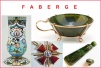
RARE RUSSIAN IMPERIAL LARGE PORCELAIN EASTER EGG, 19th C. Comprising large hand-painted porcelain Easter egg, displaying an image of the resurrected Christ within a gilt oval band. The egg is in turquoise blue and with the abbreviation XB for Christ has Risen. CONDITION: The item is described to the best of our knowledge. Please refer to pictures and email with any questions. LARGE SIZE: 11 x 8 cm. ESTIMATE PRICE: $3,000 - $4,000. You have a GREAT CHANCE to purchase a unique item for your collection - over the years it will only INCREASE in price. From real old collection! HISTORY of SALES: A few years ago Russian porcelain egg were sold on Live producteer for $11,000, $11,000, $13,000 and $13,000 - please see the screenshots. OFFER: If an item is NOT SOLD, you can still give us a reasonable offer - please save the link of this page. PAY in PARTS: You can pay for any item during 2-3 months. Just make a deposit 10% and the item will wait for you. SHIPPING: Combined shipping is available - next item will be ONE DOLLAR for shipping. NEW: Returning customers will have 50% DISCOUNT on shipping. WIKIPEDIA: Easter eggs, also called Paschal eggs, are eggs that are sometimes decorated. They are usually used as gifts on the occasion of Easter. As such, Easter eggs are common during the season of Eastertide (Easter season). The oldest tradition is to use dyed and painted chicken eggs, but a modern custom is to substitute chocolate eggs wrapped in colored foil, hand-carved wooden eggs, or plastic eggs filled with confectionery such as chocolate. However, real eggs continue to be used in Central and Eastern European tradition. Although eggs, in general, were a traditional symbol of fertility and rebirth, in Christianity, for the celebration of Eastertide, Easter eggs symbolize the empty tomb of Jesus, from which Jesus resurrected. In addition, one ancient tradition was the staining of Easter eggs with the colour red "in memory of the blood of Christ, shed as at that time of his crucifixion." This custom of the Easter egg, according to many sources, can be traced to early Christians of Mesopotamia, and from there it spread into Eastern Europe and Siberia through the Orthodox Churches, and later into Europe through the Catholic and Protestant Churches. Other sources maintain that the custom arose in western Europe during the Middle Ages as a result of the fact that Western Christians were prohibited from eating eggs during Lent, but were allowed to eat them when Easter arrived. The jewelled Easter eggs made by the Faberge firm for the two last Russian Tsars are regarded as masterpieces of decorative arts. Most of these creations themselves contained hidden surprises such as clock-work birds, or miniature ships.In Bulgaria, Poland, Romania, Russia, Ukraine, and other Central European countries' folk traditions, and making artificial eggs out of porcelain for ladies is common. Easter eggs are frequently depicted in sculpture, including a 8-metre (27 ft) sculpture of a pysanka standing in Vegreville, Alberta.